Founder-led commercial judgment for businesses where the problem is not obvious.
I'm Tulu — founder and revenue architect at Alba Collective. I work with premium B2B and founder-led businesses whose growth has stalled for reasons no single specialist can see, because the real problem sits between the disciplines: between positioning and conversion, between marketing and sales, between the CRM and the truth.
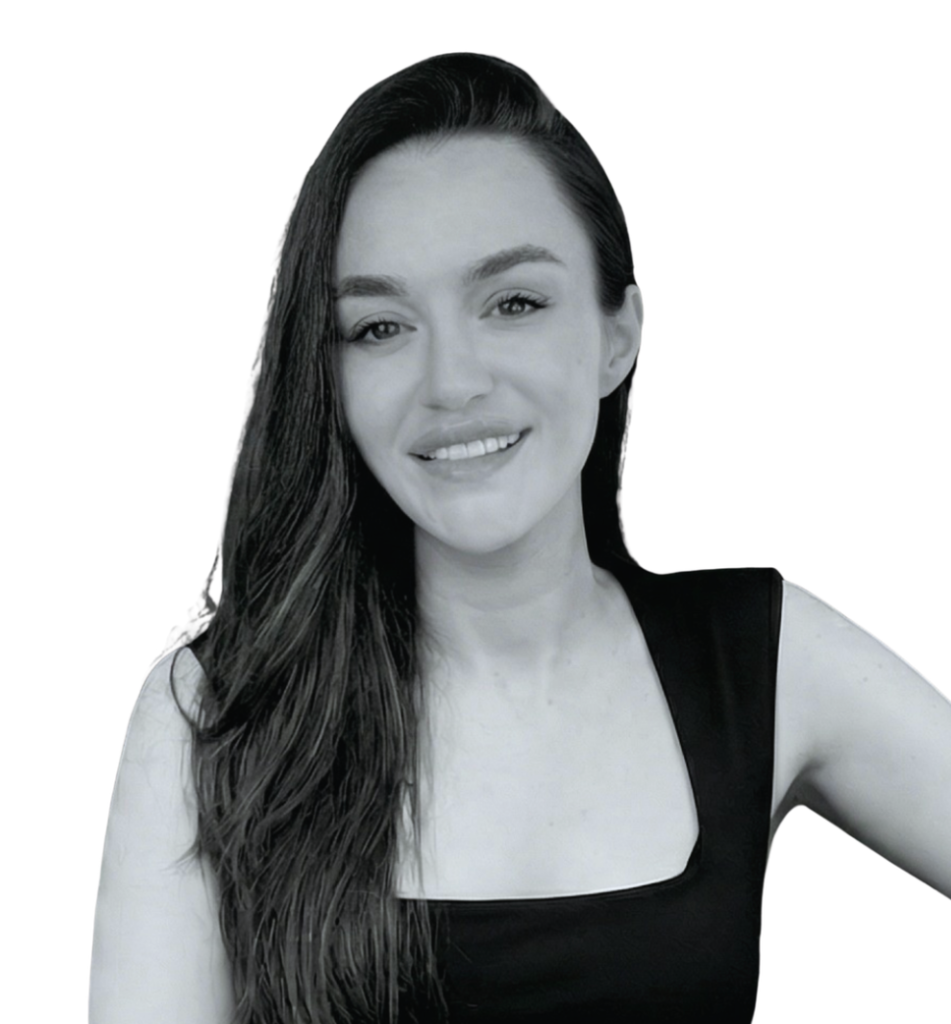
In one line: Alba Collective is a revenue architecture studio, not an agency. Every engagement is diagnosed and led by me personally — the judgment is the product, and it does not get handed to a junior team after the contract is signed.
I was trained to read structures.
I studied architecture at Politecnico di Milano. Architecture school teaches you one discipline above all others: before you design anything, you read the structure that already exists. You learn to trace loads — where pressure enters a building, how it travels, and where it will crack first. You learn that the crack in the wall is almost never where the problem is.
That habit never left me. When I moved into commercial work — selling, building websites and funnels, running CRMs, sitting in the rooms where deals were won and lost — I kept noticing the same thing. Businesses treat symptoms. Weak enquiries get a new website. A slow quarter gets more ad spend. A messy pipeline gets another tool. And the crack keeps coming back, because nobody read the structure first.
The businesses I could actually help were the ones willing to ask a harder question: where does commercial value enter this system, how does it travel, and where is it being lost? Answering that question well became the work. Eventually, it became the whole practice.
A studio, deliberately not another agency.
I built Alba Collective as a revenue architecture studio because the agency model has a structural flaw for the problems I work on. An agency sells a channel — ads, SEO, web design, outbound — so every diagnosis conveniently lands inside the service it sells. If you hold a hammer on retainer, every problem becomes a nail on a monthly invoice.
A studio works differently. It is small by design, senior by design, and paid for judgment rather than volume. I do not carry a headcount that needs feeding, so I have no incentive to prescribe work you do not need. When the honest answer is "don't rebuild the website, fix the offer" — or "don't hire me, fix your follow-up first" — I can say it, because nothing in my business model punishes me for saying it.
That is also why the front door to working with me is a paid diagnostic rather than a free pitch. The diagnosis has to be independent of what gets sold afterwards, or it is not a diagnosis — it is marketing.
One judgment, built from several trades.
Revenue architecture is not a single skill. It is what happens when several disciplines are held in one head long enough to see how a commercial system actually behaves. These are the ones the work draws on:
Architecture & systems thinking
Formal training at Politecnico di Milano in reading structures before changing them — tracing where load enters, how it travels, and where the system will fail first.
Behavioural psychology
How buyers actually decide: what builds trust, what triggers hesitation, why people say "interesting" and then go quiet. Most conversion problems are behavioural before they are technical.
AI systems & decision design
Designing workflows where AI does the heavy lifting — analysis, drafting, monitoring — while the decisions that carry commercial risk stay with a human who is accountable for them.
UX
The craft of removing friction between intent and action — on websites, in forms, in buying journeys. A confused visitor does not complain; they leave.
Sales & commercial execution
Time spent actually selling — qualifying, handling objections, following up, losing deals and learning why. Theory about pipelines is cheap; scar tissue is not.
Data & operational discipline
CRMs, analytics, and reporting that reflect reality rather than decorate it. If the numbers cannot be trusted, every decision downstream is a guess wearing a suit.
Different businesses, familiar failures.
Once you have read enough commercial systems, you stop being surprised. The industries change; the failure patterns barely do. Positioning so interchangeable that buyers default to comparing price. Websites that describe the company instead of resolving the buyer's doubt. CRMs where the stages describe hope rather than reality. Follow-up that dies after one polite email. Reporting that measures activity because activity is easier to measure than truth.
Pattern recognition is what makes a diagnosis fast and honest at the same time. I am not discovering these failure modes for the first time on your budget — I am checking which of the familiar ones apply to you, in what order, and which single constraint is holding the rest in place. That is the discipline behind the method, and it is why the recommendations come out sequenced rather than as a list of forty things to fix.
AI does the labour. I own the judgment.
I run an AI-assisted practice, and I am open about it — because it is the reason a one-person studio can do work that used to require a team. AI systems handle the volume: analysing data, auditing pages at scale, drafting variants, monitoring what changed. That compresses weeks of analyst work into days.
What AI does not do in my practice is decide. It does not diagnose your constraint, set your positioning, or choose what you fix first — because those calls require context, accountability, and a willingness to be wrong in public that no model carries. Every conclusion that reaches you has been formed, checked, and signed by me.
- AI-assisted: research, data analysis, drafting, QA, monitoring — the work that benefits from scale and tirelessness.
- Human-owned: diagnosis, prioritisation, positioning calls, pricing calls, and every recommendation with your money attached.
- Never: machine-generated conclusions passed off as senior judgment. If I put my name on it, I formed it.
What I lead. What can be delegated.
"Founder-led" is an easy claim, so here is what it means in practice. Some work carries the commercial risk of the engagement — that work is mine and does not move. Other work is execution against decisions already made, and it can be delegated to trusted specialists or handled by AI systems under my review without the quality dropping.
I lead personally
- Every diagnostic — analysis, conclusions, and the readout
- Positioning, offer, and pricing decisions
- The Fix First / Fix Next / Fix Later sequence
- Architecture of the CRM and revenue operations setup
- Design of the sales process and qualification logic
- Every client conversation that involves a decision
Can be delegated, under my review
- Production work — build-out of pages, templates, and assets
- Data pulls, tagging, and analytics housekeeping
- CRM field configuration once the architecture is set
- Draft copy variants and design iterations
- Routine reporting and monitoring
- Scheduling and administration
Who I work best with — and who I don't.
A small studio only works if the fit is honest in both directions. I would rather tell you at the application stage that we are not a match than discover it three weeks into an engagement.
Strong fit
- Premium B2B and founder-led businesses where deals are considered, not impulsive
- Founders and senior decision-makers who want the honest answer more than the comfortable one
- Businesses suspicious that the obvious diagnosis — "we need more leads" — is not the real one
- Teams willing to share real numbers and real access, not a curated version
- Leaders who value sequence: fixing the constraint before scaling the spend
Poor fit
- Anyone shopping for a cheap execution vendor to carry out a plan they have already decided on
- Businesses that want guaranteed results, rankings, or lead volumes promised up front
- Teams looking for a large agency's headcount, meeting cadence, and account managers
- Situations where the numbers will stay hidden — I cannot diagnose what I cannot see
- Anyone who needs the answer to be "spend more on ads" before the work begins
Three doors, all answered by me.
Apply
If growth has stalled and the cause is unclear, start with the application. I review every one personally, look at your business and website before replying, and answer within 48 hours — including when the honest answer is that I am not the right fit.
For anything that does not fit a form, write to hello@albacollective.co. I reply within 24 hours.
I share thinking on positioning, conversion, and revenue systems there, alongside the longer pieces in Insights.
Now you know who reads the structure.
If your growth has stalled and the reason is not obvious, the next step is not a bigger budget — it is a better diagnosis. Every application is reviewed by me personally.